Signs of storm damage are something most homeowners walk past every day without recognizing, not because the damage is hidden, but because they do not know what to look for or where to look for it. Hail leaves marks on soft metal that most people assume are cosmetic. Wind strips granules from shingles in patterns that look like normal aging. Water finds its way through a lifted flashing joint and travels six feet along a rafter before dripping through a ceiling tile in a room that has nothing above it but the roof deck.
By the time interior symptoms appear, the storm that caused them may have occurred months ago, and the insurance claim window may be closing. Understanding the full spectrum of storm damage signs, from the roof surface to the attic interior to the gutters and ground-level components, gives homeowners the ability to act correctly within the window that protects their financial interest. This guide covers everything you need to know.
What Are Signs of Storm Damage? (The Simple Definition)
Signs of storm damage are the physical indicators left on a home’s exterior, roofing system, and interior surfaces by wind, hail, rain, lightning, or ice events that confirm a qualifying weather event occurred and that the structure sustained measurable impact from it. Storm damage signs range from obvious and immediate, like missing shingles visible from the street, to subtle and progressive, like granule displacement patterns in gutters or soft spots on a shingle surface that only reveal themselves under hands-on inspection.
Recognizing storm damage signs requires looking at multiple locations simultaneously because storm damage rarely presents in a single obvious location. The complete picture of a storm event on a residential property is assembled from indicators on the roof, at gutter level, on soft metal components, on exterior cladding, and inside the attic and upper-floor ceilings.
Storm Damage Signs by Location and Urgency
| Location | What to Look For | Access Required | Urgency Level |
|---|---|---|---|
| Roof surface | Missing shingles, granule loss circles, soft spots, cracked tiles | Roof or drone | Immediate to high |
| Gutters and downspouts | Granule accumulation, denting on aluminum sections | Ground level | High |
| HVAC condenser and soft metal | Uniform denting pattern on fins and panels | Ground level | High |
| Siding and exterior cladding | Impact marks, paint chips, cracked panels | Ground level | Moderate |
| Window screens and wood trim | Tears, punctures, and impact marks on painted surfaces | Ground level | Moderate |
| Attic interior | Water staining, soft deck boards, daylight gaps | Attic access | Immediate |
| Interior ceilings and walls | Water stains, bubbling paint, sagging drywall | Interior | Immediate |
| Gutters and fascia | Separation from the roofline, water staining behind the gutter | Ground level | Moderate to high |
Storm damage assessment that covers all eight location categories produces a complete picture of the event impact. Assessments limited to one or two categories miss damage that is often more financially significant than what was found.
Why Recognizing Storm Damage Matters (The Real Cost Breakdown)
The Financial Consequences of Missed Storm Damage Signs
| Missed Damage Sign | Undetected Damage Cost | Detection and Claim Cost | Net Loss From Missing It |
|---|---|---|---|
| Granule loss on shingles (missed claim) | $10,000 to $20,000 premature replacement | $0 with timely claim filing | Up to $20,000 |
| Lifted flashing at chimney (undetected) | $4,000 to $15,000 interior water damage | $200 to $500 flashing repair | Up to $14,500 |
| Soft metal denting is not documented | $3,000 to $8,000 missed claim components | Free, ground-level documentation | Up to $8,000 |
| Attic moisture from the storm was not caught | $3,000 to $10,000 mold remediation | $0 with attic check after storm | Up to $10,000 |
| Siding impact damage not reported | $2,000 to $6,000 missed coverage | Photo documentation only | Up to $6,000 |
The pattern across every scenario is the same. Storm damage signs that are identified promptly and documented correctly lead to covered claims. The same damage missed or ignored leads to out-of-pocket repair costs that dwarf the effort of a post-storm inspection.
The One-Year Texas Claim Filing Window
In Texas, homeowners have one year from the storm date to file a wind and hail insurance claim. In most other states, the window runs one to two years. Storm damage that is not identified and documented within that window becomes an uninsured repair regardless of how clearly the storm caused it. The urgency of recognizing storm damage signs is not simply about starting repairs sooner. It is about preserving the legal right to have those repairs funded by the policy the homeowner has been paying for.
Types of Storm Events and the Specific Damage Signs They Leave
Different storm types leave distinct damage patterns, and matching the observed signs of storm damage to the specific storm type helps homeowners build a complete and defensible claim scope. Hailstorms leave the most documented and most frequently claimed pattern on residential properties. On the roof surface, hail creates circular granule displacement marks on asphalt shingles where the impact knocked loose the ceramic granule coating, exposing the darker fiberglass mat beneath
On soft metal components, including gutters, HVAC condenser fins, roof vent covers, and chimney caps, hail creates uniform denting patterns where each impact left a distinct dimple. These ground-level metal damage indicators are the most accessible physical evidence of a hail event and should be photographed immediately after any suspected hail storm.
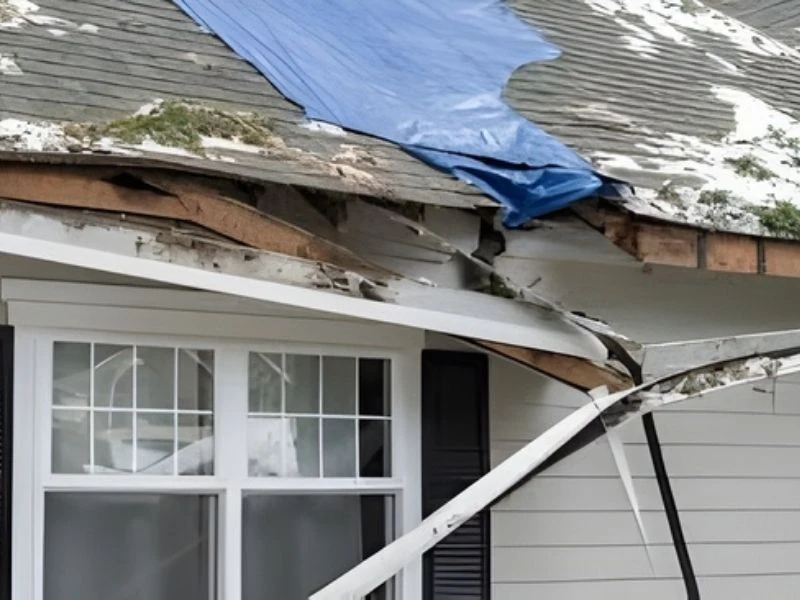
High wind events leave a different damage pattern that concentrates at the roof edges and ridge line rather than distributing uniformly across the surface. Missing ridge cap shingles, lifted eave shingles, displaced drip edge metal, and blown-off gutter sections are the primary exterior signs of wind damage. Wind events also create flashing failures at chimney bases, pipe boots, and parapet walls by lifting sealant edges and pulling counter flashing away from mortar joints.
Interior signs of wind damage typically appear faster than hail damage signs because wind-driven rain enters through displaced or lifted components immediately during the storm rather than progressively through a damaged but intact membrane. Severe thunderstorms and supercell events combine hail and wind damage simultaneously, producing the most complex and most extensive damage pattern of any residential storm type.
The combined damage from a supercell event includes all the hail indicators described above alongside all the wind displacement indicators, plus the additional damage created when wind-loosened shingles are simultaneously impacted by hail, producing through-damage at locations where either force alone might not have caused functional failure. Ice storms and winter weather events leave damage signs that are distinct from warm-season storm damage.
Ice dam formation creates water staining at the interior eave line as melting ice backs up under the shingles and enters the attic space. Icicle damage on gutters produces concentrated bending and separation at gutter hanger locations. Freeze-thaw cycling at flashing joints accelerates sealant cracking and mortar deterioration at chimney flashings during the same winter season.
Lightning strike damage is the least common residential storm damage type but produces the most dramatic visible indicators, including char marks at the strike point, split or exploded wood components along the strike path, and blown-off roofing material at the immediate impact zone. Secondary lightning damage from a power surge through electrical penetrations or from fire ignition in the attic following a strike is often more costly than the primary impact damage and requires both electrical and roofing professional assessment.
Storm Damage: A Complete Location-by-Location Inspection Guide
A thorough post-storm damage assessment covers every location in a defined sequence that builds from ground level upward to the roof surface and from exterior to interior.
Ground-level soft metal components. Begin every post-storm assessment at the HVAC condenser unit, checking the aluminum fins across the face of the unit for uniform denting patterns that confirm hail occurrence and indicate approximate hail size. Move to aluminum gutter sections, checking for denting along the front face and bottom of each section. Inspect roof vent covers, chimney caps, and any metal ridge cap accessories visible from ground level using binoculars. Document every dented surface with date-stamped photos before any cleanup or repair begins.
Window screens, wood trim, and painted surfaces. Check every accessible window screen for punctures, tears, or deformation at the screen frame that confirms hail impact. Examine painted wood surfaces on window trim, fascia boards, garage doors, and deck railings for round impact marks where paint has chipped or the wood surface has been dented. These marks confirm hail occurrence at the property level independently of the roof inspection findings.
Gutters and downspouts. After any storm, clean or visually inspect gutters for signs of storm damage, specifically granule accumulation. Fresh hail-displaced granules are uniformly colored, angular, and abundant, appearing in volumes of a cup or more per gutter section after a significant event. Normal wear granules accumulate gradually and appear mixed with organic debris. Check downspout discharge areas for granule staining on concrete or pavement below the outlet
Siding and exterior cladding. Walk the full perimeter of the home looking for impact marks on vinyl, fiber cement, wood, or brick siding. Vinyl siding cracks or dents from hail impact and shows stress marks at impact points. Fiber cement siding chips at impact locations. Wood siding shows indentations and paint displacement. Brick and masonry show spalling or chips at corners from wind-driven debris impact.
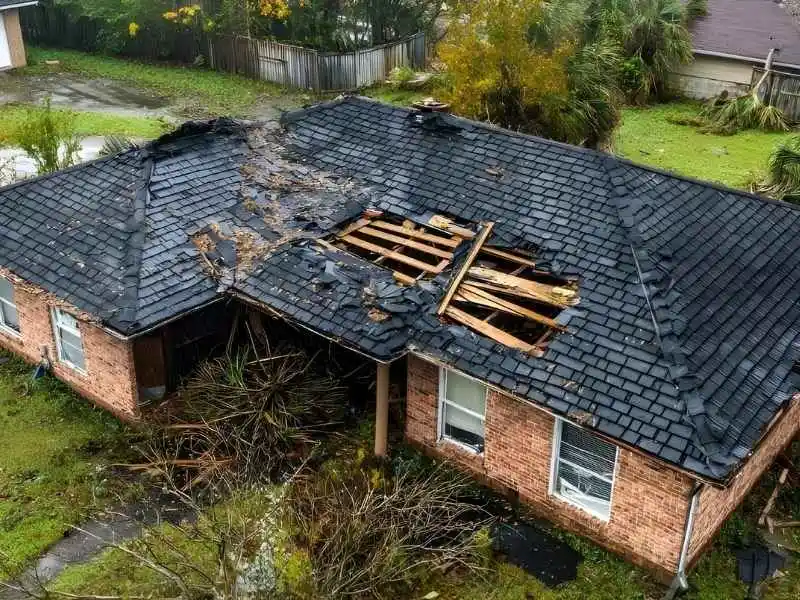
Roofline and visible roof components. From the ground, using binoculars or a smartphone camera with zoom, assess every visible roof slope for missing shingles, displaced ridge cap sections, lifted eave shingles, and any areas of exposed underlayment or deck. Check that all gutters are still attached along the full roofline and that no sections have pulled away from the fascia. Look for displaced drip edge metal along eave and rake edges.
Attic interior. Access the attic within 24 to 48 hours of any significant storm event. Using a flashlight, inspect the underside of the roof deck for water staining, soft or spongy decking boards, any points where daylight is visible through the deck, and fresh moisture on insulation or attic framing members. Attic inspection after a storm is the single most revealing interior check available to a homeowner and the one most frequently skipped.
Interior ceilings and walls. Walk through every room of the upper floor, checking ceiling surfaces for water stains, paint bubbling, or drywall discoloration. Check walls adjacent to the roofline and chimney for moisture staining. Pay particular attention to rooms below known roof penetration points, including skylights, plumbing vents, and HVAC equipment curbs on single-story sections.
Storm Damage Signs Reference by Storm Type
| Storm Type | Primary Roof Signs | Ground Level Signs | Interior Signs |
|---|---|---|---|
| Hail | Granule displacement circles, soft spots, and dented metal components | Granules in gutters, dented HVAC fins, torn screens | Staining near penetrations weeks to months later |
| High wind | Missing shingles, lifted ridge caps, displaced drip edge | Shingle debris in the yard, separated gutters | Active staining during or after storm |
| Supercell combined | All hail and wind signs simultaneously | All ground-level indicators combined | Faster interior symptoms than hail alone |
| Ice storm | Ice dam staining at the eave line, gutter separation | Bent gutters at hanger points, ground ice accumulation | Eave-line ceiling staining, wall moisture |
| Lightning | Char marks, exploded wood at the strike point | Debris from the strike zone | Attic char, electrical failure signs |
Common Storm Damage Mistakes to Avoid
Completing only a ground-level visual check and concluding that the roof is undamaged because nothing is missing or obviously broken is the most consequential assessment error homeowners make after a storm event. The most financially significant storm damage on a residential roof, including granule displacement, shingle mat bruising, and flashing sealant failure, is not visible from the ground without a zoom lens and a trained eye.
Ground-level assessment is the starting point of a post-storm inspection, not the conclusion of it. Waiting for interior symptoms like ceiling stains or active dripping before initiating a post-storm inspection eliminates the early documentation window that produces the strongest insurance claims and allows the damage to compound through additional rain events before any professional assessment begins.
Interior symptoms of hail damage typically appear months after the storm event, and by that point, the original storm date may be difficult to establish, and the one-year claim window may be significantly reduced. Assuming that the absence of visible damage on the most accessible roof slope means the full roof is undamaged misses the directional nature of storm damage.
Hail and wind damage concentrate on the slope or slopes facing the storm track direction, and the slopes least visible from the street are frequently the ones with the highest density of signs of storm damage. Every slope requires assessment before a damage conclusion is drawn.
Photographing damage with a phone camera from the ground without date and time stamps embedded in the image metadata creates documentation that cannot be tied definitively to the storm date in a claim dispute. Most modern smartphone cameras embed GPS coordinates and timestamp data automatically in image files when location services are enabled. Confirming that this metadata is active before beginning post-storm documentation takes ten seconds and produces claim-supporting evidence that generic photos cannot provide.
Cleaning up storm debris from gutters, yards, and exterior surfaces before documenting it removes physical evidence of the storm event that corroborates the damage scope. Shingle material on the ground, granules at downspout outlets, and debris patterns in the yard all tell the story of the storm’s impact at the specific property. Document before cleanup without exception.
Storm Damage Sign Benchmarks by Roof Age
The storm damage signs a homeowner observes after a given weather event are directly shaped by the age of the roofing system that absorbed it. Roofs 0 to 5 years old sustaining storm damage show the clearest and most discrete damage indicators because the shingle material is flexible and the granule adhesion is strong. Impact marks on new shingles are well-defined circular patterns with clean edges that are distinct from the surrounding intact surface.
These clear indicators make damage documentation straightforward, and claims on new roofs typically produce the strongest settlements with minimal dispute. Between 5 and 10 years, the storm damage signs begin to require more careful interpretation because normal aging has begun to reduce granule density and shingle flexibility in ways that can superficially resemble storm impact patterns.
A professional inspector who can distinguish between gradual uniform granule loss from weathering and the discrete circular loss patterns from hail impact is essential at this age to produce credible damage documentation that withstands adjuster scrutiny. At 10 to 15 years, storm damage signs on the roof surface become harder to distinguish from normal wear without hands-on inspection because the background granule loss from aging has advanced enough that fresh impact marks are less visually distinct against the already-worn surface.
The secondary indicators at ground level, particularly HVAC fin denting and screen damage, become relatively more important as corroborating evidence at this age because they respond to hail impact consistently regardless of shingle age. Between 15 and 20 years, storm damage signs are often extensive because the aged roofing material has reduced resistance to impact loading that a younger roof would absorb without functional damage.
A hail event that produces cosmetic granule displacement on a 5-year-old roof produces through-damage and mat fracturing on a 17-year-old roof exposed to the same storm. Post-storm inspections on roofs in this age range consistently document damage across a higher percentage of the roof surface than younger systems exposed to the same event.
Over the past 20 years, any significant storm event on a standard asphalt shingle roof produces signs of storm damage across the majority of the roof surface because the material has degraded to the point where its impact resistance is a fraction of its original rating. A post-storm inspection on a roof of this age is as much a replacement scope assessment as a damage documentation exercise.
Technology Tools Homeowners Can Use
Modern tools make post-storm damage sign identification faster, safer, and better documented than traditional inspection methods. Hail history verification services allow homeowners to enter a property address and retrieve a certified record of hail events at that location, including date, storm path, and maximum hail size measured at the specific address, establishing the storm date and severity from an independent third-party source before any contractor or adjuster involvement.
Smartphone cameras with optical zoom and 4K video capability allow homeowners to document roof-level damage indicators from the ground with sufficient resolution to identify granule displacement patterns, displaced ridge caps, and dented metal components without ladder access. Drone inspection services deployed by licensed roofing contractors provide complete aerial documentation of every roof slope, flashing location, and penetration point within 24 to 48 hours of a storm event, producing a georeferenced photographic damage record that is comprehensive and timestamped in a way that establishes the pre-repair damage condition definitively.
Infrared thermography cameras detect moisture infiltration through storm-damaged roof sections before interior staining appears, identifying the full extent of water intrusion through a specific damage location rather than just the visible entry point. Weather radar archive services provide historical radar imagery showing storm cell position, intensity, and hail indicator signatures over specific addresses during past storm events, providing independent meteorological documentation that supports the physical damage evidence in an insurance claim file.
DIY Assessment vs. Professional Inspection: Know the Difference
Homeowners can and should independently perform the complete ground-level and interior assessment described in this guide within 24 hours of any significant storm event. Checking HVAC fins and soft metal components for denting, inspecting gutters for granule accumulation, photographing window screen damage and siding impact marks, walking through the attic with a flashlight, and checking interior ceilings on the top floor are all safe homeowner tasks that require no roofing expertise, no ladder access to the roof surface, and no specialized equipment beyond a smartphone camera and a flashlight.
However, accessing the roof surface to assess shingle condition by hands-on palpation, evaluating flashing integrity at chimney and penetration points from the roof level, inspecting ridge cap adhesion and fastener condition, and producing the professional damage documentation that supports an insurance claim all require a licensed roofing contractor with appropriate fall protection equipment. The homeowner’s ground-level and interior assessment creates the initial documentation and identifies the urgency level. The professional inspection that follows produces the damage scope that funds the repair.
Seek immediate professional attention if the attic inspection reveals active dripping or fresh water staining on deck boards following a recent storm, if multiple shingles or ridge cap sections are visible on the ground or in the yard after a wind event, or if the HVAC condenser shows uniform denting across the full face of the unit, indicating hail large enough to cause functional roof damage. These are signs of a storm event severe enough to warrant a professional inspection within days rather than at the next scheduled maintenance interval.
Final Thoughts
Signs of storm damage are present on virtually every home that has been exposed to a significant hail or wind event, and the homeowners who find them, document them, and act within the claim-filing window consistently receive funded repairs that cost them nothing beyond their deductible. The homeowners who miss them fund the same repairs entirely out of pocket.
The difference between those two outcomes is not the severity of the storm. It is a 30-minute post-storm walkthrough using the location-by-location sequence in this guide and a phone call to a licensed inspector when the secondary indicators confirm a qualifying event occurred. No roofing expertise required, just the knowledge of where to look and what to look for. Schedule to get a free inspection and contact us today.
FAQs
1. What are the most visible signs of storm damage on a roof?
A: Missing or displaced shingles, granules accumulating in gutters, and uniform denting on HVAC fins and aluminum gutters are the most reliable and accessible post-storm indicators.
2. Can I identify signs of storm damage without getting on the roof?
A: Yes. Ground-level checks of soft metal components, gutters, window screens, and siding, combined with an attic interior inspection, identify most qualifying storm damage without roof access.
3. How soon after a storm should I check for damage signs?
A: Within 24 to 48 hours. Early documentation produces the strongest claim evidence and allows emergency stabilization before the next rain event compounds the damage.
4: Do signs of storm damage always include roof leaks?
A: No. Most hail damage does not produce immediate leaks. Functional shingle damage creates leaks months to years later, long after the claim window may have closed.
5: What should I do after identifying signs of storm damage?
A: Photograph all indicators with timestamps, call your insurer to open a claim, and schedule a licensed roofing contractor for a professional inspection within the same week.