RV roof replacement cost is one of the most searched and least understood expenses in the entire recreational vehicle ownership journey. Thousands of RV owners put off addressing soft spots, bubbling seams, and slow interior leaks for one or two seasons, not realizing that what started as a $400 repair quietly compounds into a full structural replacement costing five times that amount.
Water intrusion in an RV moves faster and spreads wider than in a residential home because the walls, flooring, and cabinetry are all built from lightweight materials that absorb and retain moisture aggressively. This guide covers everything you need to know, from material options and real cost ranges to the step-by-step inspection process, common owner mistakes, and exactly when a professional must be called before the damage becomes total loss territory.
What Is RV Roof Replacement?
RV roof replacement is the process of removing the existing roof membrane, underlayment, and in some cases the decking substrate, and installing a fully new roofing system across the top of a recreational vehicle. Unlike patching or resealing, a full replacement addresses the complete surface and restores the structural waterproofing layer that protects every system inside the coach, from electrical wiring and insulation to cabinetry and slide-out mechanisms.
The scope of work varies significantly depending on whether the decking itself has rotted and requires replacement along with the membrane, which is the most common and most expensive scenario RV owners face.
| Roof Material | Average Replacement Cost | Lifespan | Best For |
|---|---|---|---|
| EPDM Rubber | $1,500 to $3,500 | 10 to 15 years | Class A motorhomes, travel trailers |
| TPO Single-Ply | $2,000 to $4,500 | 15 to 20 years | Class C, fifth wheels |
| Fiberglass | $3,000 to $6,000 | 20 to 25 years | Premium motorhomes |
| Aluminum | $2,500 to $5,000 | 20 to 30 years | Vintage and cargo conversions |
| Liquid Roof Coating | $500 to $1,500 | 5 to 10 years | Budget restorations, partial replacements |
Why RV Roof Replacement Cost Matters More Than You Think
Understanding rv roof replacement cost before damage becomes severe is the financial decision that separates owners who protect their investment from those who watch it depreciate into an uninsurable total loss. A small roof membrane failure repaired at the first sign of trouble costs between $300 and $800 in materials and labor, but the same failure left unaddressed for a single winter allows moisture to penetrate the wood decking, which then requires full decking replacement alongside the membrane, pushing the total job to $4,000 to $8,500 on a mid-size travel trailer and $7,000 to $14,000 on a Class A motorhome.
On larger diesel pushers and luxury coaches, full roof and decking replacement with fiberglass membrane can reach $20,000 or more when interior remediation costs are included. Insurance policies on recreational vehicles frequently exclude water damage resulting from deferred maintenance, meaning the owner absorbs the entire cost out of pocket when documentation shows the problem was gradual rather than sudden.
The consequence most RV owners completely overlook is the cascading damage to the slide-out seals and the structural integrity of the sidewall topcaps. When roof water runs laterally under the membrane before finding an exit point, it saturates the foam insulation inside the sidewalls and compromises the adhesive bonding that holds the delaminating fiberglass outer skin to its substrate.
Sidewall delamination repairs run $1,500 to $4,000 per panel and are entirely separate from the roof replacement cost itself, meaning a single neglected roof seam can generate two major repair invoices instead of one.
Types of RV Roof Systems and What Replacement Involves
EPDM rubber roofing is the most common membrane found on RVs manufactured between 1990 and the early 2010s, and it remains a popular replacement choice due to its low material cost and ease of field installation. EPDM is a single-ply rubber sheet bonded to the decking with contact cement, and its most common failure mode is shrinkage at the edges and seam separation around vents and air conditioner curbs.
TPO (thermoplastic polyolefin) single-ply membranes have become increasingly standard on newer RVs and represent an upgrade over EPDM in terms of UV resistance and heat reflectivity. TPO seams are heat-welded rather than adhesive-bonded, which makes them more durable at transition points, and the material is more resistant to the ponding water that accumulates on flatter roof profiles common on fifth wheels and toy haulers.
Fiberglass roofing on premium coaches is a rigid, molded panel system rather than a flexible membrane, and replacement involves either full panel replacement or a re-skin process using new fiberglass laminate over a rebuilt decking substrate. Fiberglass roofs are the most durable option available, but carry the highest replacement cost and require a shop with structural fabrication capability rather than a simple membrane installation crew.
Aluminum roofing is common on older Airstream and vintage travel trailers, as well as on cargo trailer conversions, and replacement typically involves riveted aluminum sheet panels over a wood or composite frame. Aluminum systems are extremely long-lived when kept clean and sealed, but when they fail at rivet locations or seam laps, water penetration can be widespread before any interior symptom appears.
Liquid roof coatings, such as Dicor and similar elastomeric products, are not a true replacement system but are widely used as a budget restoration method on EPDM and TPO roofs showing surface crazing or minor seam fatigue without full substrate failure. A liquid coating applied correctly over a properly prepared surface can restore waterproofing performance for five to ten additional years for $500 to $1,500 for most RV sizes.
Composite decking replacement is a category of its own that frequently accompanies any membrane replacement on an RV with a deferred maintenance history. When the underlying luan or oriented strand board decking has absorbed moisture and lost structural rigidity, it significantly impacts the total rv roof replacement cost because the new membrane has no sound substrate to adhere to, and skipping this step leads to total failure within two to three years.
Step-by-Step Guide to Evaluating and Managing RV Roof Replacement
1. Conduct a thorough interior inspection before touching the roof surface. Walk every inch of your RV interior and press firmly on the ceiling panels, wall tops, and the area directly above slide-out openings. Soft, spongy, or discolored ceiling material confirms active or historic moisture intrusion and tells you whether the damage has already reached the decking layer, which significantly changes your replacement scope and cost estimate.
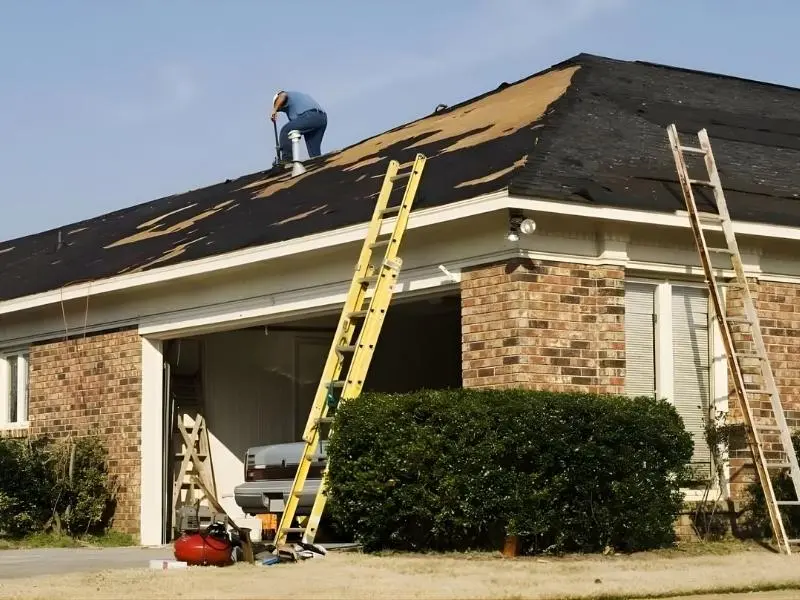
2. Access the roof safely and perform a full walking inspection. Use a proper ladder rated for your weight plus equipment and walk the entire roof surface in overlapping passes, pressing lightly with your foot to feel for soft spots in the decking beneath the membrane. Pay specific attention to every seam, every vent and air conditioner curb, every antenna mount, and all four perimeter edges where the membrane meets the sidewall caps.
3. Document every deficiency with photographs and measurements. Photograph every crack, separation, puncture, bubbled area, and soft spot from directly above and from a 45-degree angle to capture depth context. Measure the linear footage of compromised seams and the square footage of any surface areas requiring attention, because this documentation directly drives the accuracy of your repair or replacement quotes and protects you from scope creep during the job.
4. Get a minimum of three written quotes from RV-specific roofing contractors. General roofing contractors who work only on residential buildings lack the specialized knowledge of RV membrane systems, decking construction, and roof penetration configurations that make RV roof work fundamentally different from house roofing. Request itemized quotes that separate membrane materials, decking materials if needed, labor, and sealant work so you can make accurate comparisons between bids.
5. Verify material specifications and warranty terms before signing any contract. Confirm exactly which membrane product is being installed, its manufactured thickness, the adhesive or bonding method, and what warranty the manufacturer provides on the membrane itself versus what the contractor warrants on labor. Many budget quotes use thinner or lower-grade membrane materials that look identical on paper but perform significantly worse over the first five years of service.
6. Plan the project timing around dry weather and temperature requirements. EPDM and TPO adhesives and liquid coatings have minimum application temperature requirements, typically 50 degrees Fahrenheit and rising, and applying them in cold or humid conditions causes adhesion failures that void both contractor and manufacturer warranties. Schedule replacement work for late spring through early fall in most climates and confirm that a multi-day dry weather window exists for the adhesive cure period.
7. Perform a post-installation water test before accepting the completed work. Run a garden hose at low pressure over every seam, penetration, and perimeter edge for a minimum of 15 minutes while someone monitors the interior ceiling for any sign of moisture. This simple test catches installation errors immediately, when the contractor is still on site and obligated to correct them, rather than after the first heavy rainstorm six months later.
Common Mistakes RV Owners Make About Roof Replacement
The most financially damaging mistake RV owners make is treating a liquid recoat as a permanent solution when the underlying membrane or decking has already failed structurally. Elastomeric coatings applied over a membrane that has lost adhesion to the decking or over decking that is already soft and compromised will peel, crack, and fail within one to two seasons, meaning the owner pays twice and still ends up with the full replacement cost they were trying to avoid. A coating is a maintenance product, not a structural repair.
Many owners make the mistake of attempting full DIY membrane replacement without understanding how critical proper adhesive coverage and seam work are to long-term waterproofing performance. EPDM and TPO installation looks straightforward in online tutorials, but requires consistent adhesive coverage, precise seam overlap measurements, and correct pressure application across the entire bonded surface to achieve the watertight seal the system depends on. An improperly installed DIY roof membrane can fail at multiple seam locations within the first year and void any material warranty in the process.
Ignoring the roof penetrations during a replacement project is a third mistake that generates callbacks and new leaks within months of a completed job. Every vent cap, air conditioner curb, antenna base, solar panel mount, and plumbing vent that passes through the roof surface requires individual attention, proper sealant application, and, in some cases, new mounting hardware, because the old sealant around these penetrations has already been compromised by the same UV exposure and thermal cycling that damaged the membrane itself.
Choosing a contractor based on price alone without verifying RV-specific roofing experience is a mistake that produces poor outcomes at a surprisingly high frequency. The lowest bidder on an RV roof job is often a general handyman or residential roofer who underestimates the material quantities, uses incorrect adhesives, and lacks familiarity with RV roof penetration configurations, resulting in a job that looks complete but fails within one or two seasons.
Age and Performance Benchmarks for RV Roof Systems
In the first five years of a new or freshly replaced RV roof, the membrane should perform at or near its original specification with maintenance limited to annual cleaning and seam sealant inspection. This is the window when installation defects, if any exist, reveal themselves at seams and penetrations, and most contractor labor warranties cover workmanship corrections during this period at no cost to the owner.
After five to ten years, EPDM and TPO membranes begin showing the first signs of UV weathering in the form of surface chalking, slight stiffening of the membrane edges, and the first generation of seam sealant fatigue around vent curbs and perimeter edges. Annual resealing of all penetrations and perimeter laps during this period is the single most cost-effective maintenance activity available, typically running $150 to $350 in materials for a full-size Class A coach.
Between ten and fifteen years, most EPDM roofs are in the middle of their expected service life and require close attention during every annual inspection. Seam separation becomes more common, adhesive bond strength at the perimeter begins to decrease, and any areas that have experienced ponding water show accelerated degradation relative to the rest of the membrane. This is the window where the rv roof replacement cost calculation becomes relevant, because proactive replacement before failure is still less expensive than emergency replacement after water damage has reached the decking.
From fifteen to twenty years, EPDM roofs are operating near or past their warranty design life, and TPO systems are in the final third of their expected performance window. Repair costs during this period often approach the cost of full replacement on a per-incident basis, and property owners with RVs in this age range should build full replacement into a three to five-year capital planning budget rather than continuing to patch individual failures.
Beyond twenty years, any RV roof system still performing adequately represents either exceptional build quality, consistent professional maintenance, or both, and a comprehensive evaluation is warranted to determine whether the system can provide additional service years or whether replacement is the more sound investment heading into the next decade of ownership.
Technology Tools for RV Roof Inspection and Replacement
Moisture meters designed for wood and composite materials are one of the most valuable tools any RV owner can own, allowing direct measurement of moisture content in ceiling panels and decking through the finished interior surface without any destructive testing. A reading above 19 percent moisture content in wood decking material confirms active or retained moisture and indicates that replacement rather than coating is the appropriate response.
Infrared thermal cameras, now available as smartphone attachments starting around $200, allow homeowners to scan the interior ceiling for temperature differentials that reveal hidden wet insulation and moisture pathways that are completely invisible to standard visual inspection. A wet ceiling section retains heat differently than a dry one, and an infrared scan performed during or shortly after rainfall produces a clear map of moisture infiltration zones.
Seam probe tools, available through RV parts suppliers for under $50, allow owners to test the adhesive bond strength of EPDM membrane seams by applying controlled lateral pressure without damaging an intact seam. A seam that lifts or separates under light probe pressure has already lost adhesion and requires immediate professional resealing or membrane replacement before water infiltration begins.
Drone cameras equipped with high-resolution optical zoom allow owners with large or tall Class A coaches to inspect roof surfaces from the ground safely and thoroughly, capturing close-up imagery of seams, penetrations, and surface conditions without the fall risk associated with ladder access on a 13-foot-tall motorhome. Drone footage also creates a dated visual record of roof condition that supports insurance claims and contractor scope discussions.
RV-specific roofing estimator apps, such as those offered by Dicor, Alpha Systems, and several independent RV service platforms, allow owners to input their coach dimensions, roof material type, and identified deficiency areas to generate a baseline material cost estimate before soliciting contractor quotes. Having an independent cost benchmark prevents owners from accepting inflated bids and creates an informed starting point for contractor negotiations.
DIY vs. Professional RV Roof Work
There is a meaningful range of roof maintenance activities that a capable and safety-conscious RV owner can perform independently without professional assistance. Cleaning the roof membrane with manufacturer-approved cleaners, inspecting and reapplying lap sealant around penetrations and perimeter seams, installing replacement vent covers and air conditioner gaskets, and applying a liquid elastomeric recoat over a sound existing membrane are all within reach of an owner with basic mechanical skills, a proper ladder, and a dry weather window.
These activities collectively represent the most impactful annual maintenance investment available and can push the timeline for full RV roof replacement cost significantly further into the future. Full membrane replacement, decking repair or replacement, structural repairs to roof bows or the top rail assembly, and any work on a roof where the coach is still under manufacturer or extended warranty must be performed by a certified RV technician or an RV-specific roofing contractor.
The consequences of an improperly installed membrane are not limited to the roof itself; they extend to warranty voidance, insurance claim denials, and structural damage that can total a coach that might otherwise have provided many additional years of service.
Final Thoughts
Knowing your rv roof replacement cost options before you need them puts you in the strongest possible position to protect one of the largest investments most families make outside of their primary home. Inspect your roof every spring without exception, reseal every penetration annually, and treat early membrane fatigue as the affordable warning it is rather than the crisis it becomes when ignored.
The gap between a $400 maintenance visit and a $12,000 emergency replacement is almost always a single missed inspection season. Act now and document everything to ensure your RV rewards you with years of reliable service, so get a free quote and free inspection to contact us today to stay ahead of costly repairs.
FAQs
1. What is the average RV roof replacement cost for a travel trailer?
Most travel trailer roof replacements run $1,500 to $4,500, depending on size, material choice, and whether decking replacement is needed.
2. How long does RV roof replacement take?
A standard membrane replacement takes one to three days. Jobs requiring decking replacement typically run three to five business days.
3. Does RV insurance cover roof replacement?
Insurance covers sudden damage like storm impact, but typically excludes gradual water damage from deferred maintenance or seam wear.
4. Can I replace my RV roof myself to save money?
DIY membrane replacement is possible for capable owners, but decking repairs and structural work require a certified RV technician.
5. How do I know if I need a full replacement versus resealing?
If your decking feels soft underfoot or interior ceilings show staining, full replacement is needed. Surface crazing alone may only need recoating.