A commercial roofing inspection checklist is the single most important document standing between your building and a catastrophic, budget-destroying repair bill. Too many property owners wait until water is dripping through ceiling tiles or visible damage has spread across entire membrane sections before calling a professional, and by that point, a $2,000 repair has quietly grown into a $40,000 replacement.
Roof damage rarely announces itself loudly; it builds slowly through pooling water, cracked flashing, and compressed insulation that goes unnoticed for months or even years. This guide walks you through every critical element of a thorough commercial roof inspection, from surface materials and drainage systems to interior warning signs and the tools professionals use to catch problems early.
What Is a Commercial Roofing Inspection Checklist?
A commercial roofing inspection checklist is a structured, itemized evaluation protocol used to assess the condition of a commercial roof system across all its components, including the membrane, flashing, drainage, insulation, penetrations, and interior ceiling.
Unlike a casual visual scan, a proper checklist follows a documented sequence so that nothing gets skipped, every finding gets recorded, and repair priorities get ranked by urgency and cost. Think of it as the annual physical exam for your building’s most expensive and most vulnerable surface. Roofing professionals and property managers use this tool to make informed decisions about maintenance budgets, warranty compliance, and capital improvement timelines.
| Inspection Category | Key Components Checked | Typical Issues Found |
|---|---|---|
| Membrane / Surface | TPO, EPDM, modified bitumen, built-up | Blistering, punctures, seam separation |
| Flashings | Edge, pipe, curb, wall tie-ins | Cracks, lifting, rust, improper sealing |
| Drainage System | Drains, scuppers, gutters, downspouts | Blockages, standing water, slope failures |
| Penetrations | HVAC units, vents, skylights, and conduits | Failed sealant, cracked pitch pans |
| Insulation | Compressed, wet, or missing sections | Energy loss, moisture retention |
| Interior Ceiling | Deck, insulation, visible water staining | Active leaks, mold, and structural decay |
Why a Commercial Roofing Regular Inspection Checklist Matters
Skipping regular inspections is one of the most expensive passive decisions a commercial property owner can make. The average commercial roof replacement runs between $10,000 and $80,000, depending on size, material, and regional labor costs, with large flat roofs on warehouses or retail centers reaching well over $200,000.
Studies from the National Roofing Contractors Association consistently show that roofs receiving regular documented inspections last 30 to 50 percent longer than those that receive only reactive maintenance, meaning a $500 annual inspection can realistically extend your roof’s lifespan by 5 to 10 years and defer a six-figure capital expense.
Water intrusion discovered early costs an average of $1,500 to $3,500 to remediate, while the same leak left unaddressed for two full seasons routinely escalates into $15,000 to $25,000 in structural repairs, mold remediation, and interior damage claims. What most property owners overlook is the secondary financial damage that flows through the building when a roof is compromised.
Wet insulation loses up to 40 percent of its R-value, meaning your HVAC system works significantly harder and your energy bills climb month after month without any obvious roofing symptom to blame. Insurance carriers are also paying close attention: an undocumented roof in poor condition can trigger claim denials, policy non-renewals, or premium increases that easily exceed the cost of the inspection and repair work combined.
Maintaining a consistent commercial roof inspection checklist creates a paper trail that protects your coverage, satisfies lender requirements on financed properties, and gives you documented leverage during insurance negotiations.
Types of Commercial Roofing Systems the Checklist Must Cover
A commercial roofing inspection checklist must be adapted to the specific roof system installed on your building, because each material type carries its own failure patterns, inspection priorities, and acceptable condition thresholds.
TPO (thermoplastic polyolefin) roofing is one of the most common single-ply systems on commercial buildings today, and inspectors focus heavily on seam integrity, UV degradation, and puncture damage from foot traffic or mechanical equipment. A compromised TPO seam can allow water infiltration across a surprisingly wide area before any interior staining appears, making seam checks a high-priority item on every inspection cycle.
EPDM (ethylene propylene diene monomer) rubber roofing requires inspectors to look carefully at adhesive failure along seams and at flashings, along with surface shrinkage that pulls the membrane away from wall tie-ins and curbs. EPDM is highly durable but vulnerable at transition points, and the checklist must include detailed documentation of every edge and penetration.
Modified bitumen systems, common on older commercial and low-slope residential-commercial hybrid buildings, develop alligatoring, surface cracking, and blister formations that indicate moisture has entered the multi-layer assembly. Inspectors look for granule loss on the cap sheet, delamination between layers, and any areas where the material has softened and displaced under mechanical load.
Built-up roofing (BUR) systems, sometimes called tar-and-gravel roofs, require the inspector to probe for soft spots indicating wet insulation beneath the gravel surface, check the condition of the flood coat, and document any areas where gravel has been displaced or washed away. These systems can last 20 to 30 years with proper maintenance, but insulation saturation is nearly invisible from the surface without proper equipment.
Metal roofing on commercial buildings requires its own checklist, with emphasis on fastener backing plates, panel seam separation, rust formation at low points, and the condition of sealant at every penetration and ridge cap. Metal systems are highly durable but suffer concentrated failure at mechanical fastener locations, especially in climates with significant thermal cycling.
Green roofs and vegetative systems represent a growing commercial category and require checklist items unique to their design, including root barrier integrity, drainage layer performance, growing medium depth, and the condition of the underlying waterproofing membrane beneath the entire planted assembly.
Step-by-Step Commercial Roofing Inspection Breakdown
1. Document the baseline before you begin. Before stepping onto the roof, collect the installation date, material specifications, warranty documents, and any previous inspection reports. Knowing the age and original specification of the system tells you what failure modes are statistically most likely and whether the roof is within its expected service life or already operating on borrowed time.
2. Inspect the interior ceiling and upper floor spaces first. Walk every interior space directly beneath the roof deck before going outside. Look for water staining, discoloration, soft ceiling tiles, rust on structural steel, and any odor suggesting mold or biological growth. Interior evidence often reveals leak locations that are difficult to trace from the roof surface alone, and it helps you prioritize which exterior zones need the closest attention.
3. Evaluate drainage infrastructure across the entire roof field. Walk to every roof drain, scupper, and gutter outlet and confirm they are clear, properly pitched, and structurally sound. Standing water, also called ponding water, that remains more than 48 hours after rainfall is a code concern and a warranty violation on most membrane systems, and it accelerates surface degradation significantly.
4. Inspect the full membrane surface methodically in overlapping passes. Walk the entire roof in systematic parallel passes rather than random wandering, looking for punctures, blistering, surface cracking, alligatoring, seam separation, and any area where the membrane has lifted or displaced. Mark every deficiency with a non-damaging flagging method and photograph each finding with a measurement reference for accurate documentation.
5. Examine all flashings, penetrations, and transitions in detail. Flashings at walls, curbs, pipes, HVAC curbs, skylights, and roof edges fail more frequently than the field membrane itself, and a comprehensive commercial roofing inspection devotes significant attention to these transition zones. Check for cracks, lifting, rust, failed sealant, and improper overlap at every location, because a $30 tube of sealant applied proactively prevents a $3,000 interior damage repair.
6. Probe for wet insulation using either physical core sampling or infrared scanning. Surface appearance alone cannot reveal saturated insulation beneath a membrane that still looks acceptable. Core cuts at suspect locations or an infrared thermography scan performed at dusk can reveal moisture-laden insulation across wide roof areas without destructive testing, allowing targeted replacement rather than full tear-off.
7. Compile findings into a prioritized written report with photographs. Every finding must be documented with location, severity, recommended action, and estimated repair cost. Categorize items into immediate safety or leak-active concerns, near-term maintenance needs within 6 to 12 months, and long-term capital planning items. A written report protects you legally, supports insurance claims, and gives roofing contractors a defined scope rather than an open-ended work order.
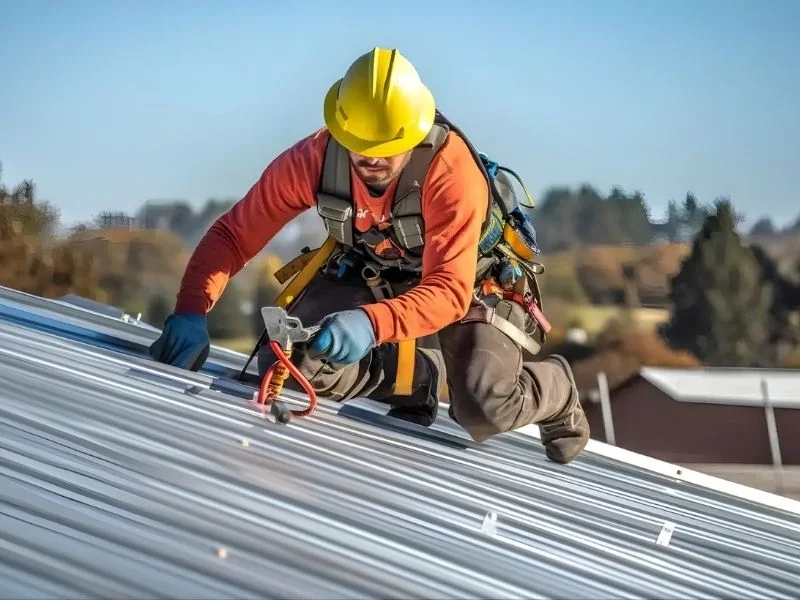
Common Mistakes Property Owners Make With Commercial Roof Inspections
One of the most damaging mistakes is scheduling inspections only after a visible problem appears. Reactive inspection defeats the entire purpose of the commercial roofing inspection checklist, because by the time a leak is visible inside the building, the moisture has typically been present in the insulation layer for weeks or months, spreading well beyond the visible interior stain.
Proactive inspections twice per year, ideally in spring and fall, catch the early-stage conditions that cost a fraction of what emergency repairs demand. A second common mistake is allowing unqualified personnel to perform the inspection. A general maintenance worker walking a roof and reporting that it looks fine is not a commercial roofing inspection in any meaningful sense.
Qualified inspectors understand material-specific failure modes, know how to identify early seam separation on TPO versus EPDM, and carry the documentation skills and liability coverage necessary to produce a report that holds up in a warranty claim or insurance dispute.
Many property owners make the mistake of ignoring drainage completely until a blockage creates an obvious problem. Roof drains clogged with debris create ponding conditions that dramatically accelerate membrane wear, and the weight of standing water, which runs approximately 5.2 pounds per gallon, can stress a roof deck beyond its design load in severe cases. Drain inspection and clearing should be a separate line item on every commercial roof inspection checklist performed, not an afterthought.
Skipping interior inspections is a fourth mistake that significantly reduces the value of any roof assessment. Inspectors who only walk the exterior surface miss early evidence of infiltration that has not yet reached the membrane surface in an easily identifiable form. Discolored decking, rust bleed from fasteners, and subtle ceiling staining visible only from inside the building often point to leak pathways that look completely normal from the roof surface.
Finally, many owners make the mistake of filing inspection reports without acting on the findings promptly. A documented inspection that sits in a drawer while moderate repairs escalate into major failures creates both financial and legal exposure, especially if a tenant experiences property damage or personal injury related to roof conditions that were identified and left unaddressed. Every commercial roof inspection checklist should include a follow-up action deadline for each finding category.
Age and Performance Benchmarks for Commercial Roof Systems
During the first five years of a commercial roof’s life, the system should perform close to its original specification with minimal maintenance demands beyond keeping drains clear and sealants intact. This is the period when installation defects, if any exist, begin to reveal themselves, typically as seam failures or flashing separations that appear within the first 12 to 24 months and should be addressed under the contractor’s warranty.
For five to ten years, most commercial roof systems remain in reliable service but begin showing early signs of normal weathering. UV exposure starts to harden single-ply membranes, flashing sealants begin their first degradation cycle, and drainage infrastructure may need its first meaningful cleaning and repair attention. This is also the window when original insulation compression becomes measurable and starts affecting energy performance.
Between ten and fifteen years, the pace of required maintenance accelerates noticeably. Seams on TPO and EPDM systems require closer scrutiny during every commercial roof inspection cycle, flashing replacement becomes a recurring budget line item, and the first meaningful areas of insulation saturation may be identified through infrared scanning. Proactive re-seaming and targeted insulation replacement during this window can extend system life by five to eight additional years.
From fifteen to twenty years, most commercial roof systems are operating in the final third of their expected service life, and inspection findings shift from maintenance-oriented to capital planning-oriented. The frequency of active leaks increases, repair costs begin approaching the economic threshold where replacement becomes more cost-effective, and energy performance has typically degraded enough to be measurable in utility bills.
Annual inspections become more critical during this window than at any earlier stage. Beyond twenty years, most commercial membrane systems have exceeded or are approaching their warranted service life, and a comprehensive commercial roofing inspection checklist at this stage is primarily a tool for deciding whether targeted repairs can squeeze additional service years out of the existing system or whether full replacement is the more financially sound decision.
Some built-up roofing and metal systems perform well beyond twenty years with consistent maintenance, but single-ply membranes installed before improvements in UV stabilization chemistry are often candidates for replacement in this age range.
Technology Tools for Modern Commercial Roof Inspections
Infrared thermography cameras are now one of the most valuable tools in commercial roof inspection, allowing inspectors to detect moisture-saturated insulation beneath intact-looking membranes by identifying the temperature differential between wet and dry areas during evening cool-down periods. A single infrared scan can reveal thousands of square feet of hidden moisture damage that would otherwise require dozens of destructive core cuts to locate.
Drone-mounted cameras equipped with high-resolution optical and thermal imaging allow inspectors to document large commercial roof surfaces safely and efficiently, capturing overhead imagery that reveals pooling patterns, membrane color variation, and debris accumulation in a fraction of the time required for full walking inspections. Drone footage also provides a visual record of hard-to-access areas near HVAC equipment and roof edges.
Nuclear moisture meters, sometimes called capacitance meters, measure the dielectric properties of roofing materials to identify elevated moisture content in insulation layers without cutting the membrane. These handheld devices allow inspectors to map wet areas precisely and document moisture boundaries for accurate scope-of-work estimates.
Core sampling kits allow inspectors to remove small plug samples from suspect roof areas to physically examine and weigh insulation for moisture content, confirm membrane thickness, and verify that the installed assembly matches original specifications. Core analysis costs almost nothing and provides definitive answers in areas where scanning tools produce ambiguous readings.
Roof inspection software platforms such as RoofSnap, AccuLynx, and iRoofing allow inspectors to document findings in real time using mobile devices, automatically geo-tag photographs, generate professional written reports in the field, and maintain a digital inspection history tied to a specific property address. These platforms make the commercial roofing inspection a living document rather than a paper form that gets lost in a filing cabinet.
DIY vs. Professional Commercial Roof Inspections
There are several meaningful inspection activities a knowledgeable property owner or facilities manager can safely perform regularly. Walking the interior ceiling spaces after heavy rainfall to identify new staining, checking that roof drains and scuppers are free of debris, visually scanning accessible roof areas for obvious membrane disturbance or standing water, and reviewing previous inspection reports for recurring problem locations are all reasonable owner-level activities.
Maintaining a simple log of dates, weather events, and observed conditions between professional inspections gives licensed inspectors valuable context and can help identify patterns in how and where the roof system is deteriorating. However, a formal commercial roofing inspection checklist conducted for warranty compliance, insurance purposes, or capital planning decisions must be performed by a licensed roofing contractor or certified roof inspector.
Professionals carry the liability coverage, material-specific training, and diagnostic equipment that a facility’s walk-through simply cannot replicate. Accessing steep or high commercial roofs without proper fall protection is also a serious safety violation under OSHA regulations, and property owners should never send uncertified personnel onto commercial roof surfaces for inspection purposes.
Final Thoughts
A well-executed commercial roofing inspection checklist is not an expense; it is the most cost-effective maintenance investment available to any commercial property owner. Inspect twice a year, document everything, and act on findings before they compound to treat your roof as the revenue-protecting asset it truly is.
The difference between a $1,500 repair and a $50,000 replacement is almost always a missed inspection cycle, so schedule free inspections to contact us today, and put your building in a fundamentally stronger financial position for every year that follows.
FAQs
1. How often should a commercial roofing inspection checklist be completed?
Twice yearly, in spring and fall, plus after any major storm event exceeding 60 mph winds or large hail.
2. How much does a professional commercial roof inspection cost?
Most commercial inspections run $300 to $900, depending on roof size, access difficulty, and report requirements.
3. Can I use the same checklist for every commercial roof type?
No. TPO, EPDM, metal, and BUR systems each have unique failure modes requiring material-specific inspection criteria.
4. Does a commercial roofing inspection checklist satisfy warranty requirements?
Most manufacturer warranties require documented professional inspections on a set schedule; confirm specifics with your warranty provider.
5. What is the most commonly missed item on a commercial roofing inspection checklist?
Interior ceiling inspection is most frequently skipped, yet it often reveals moisture infiltration invisible from the roof surface.